
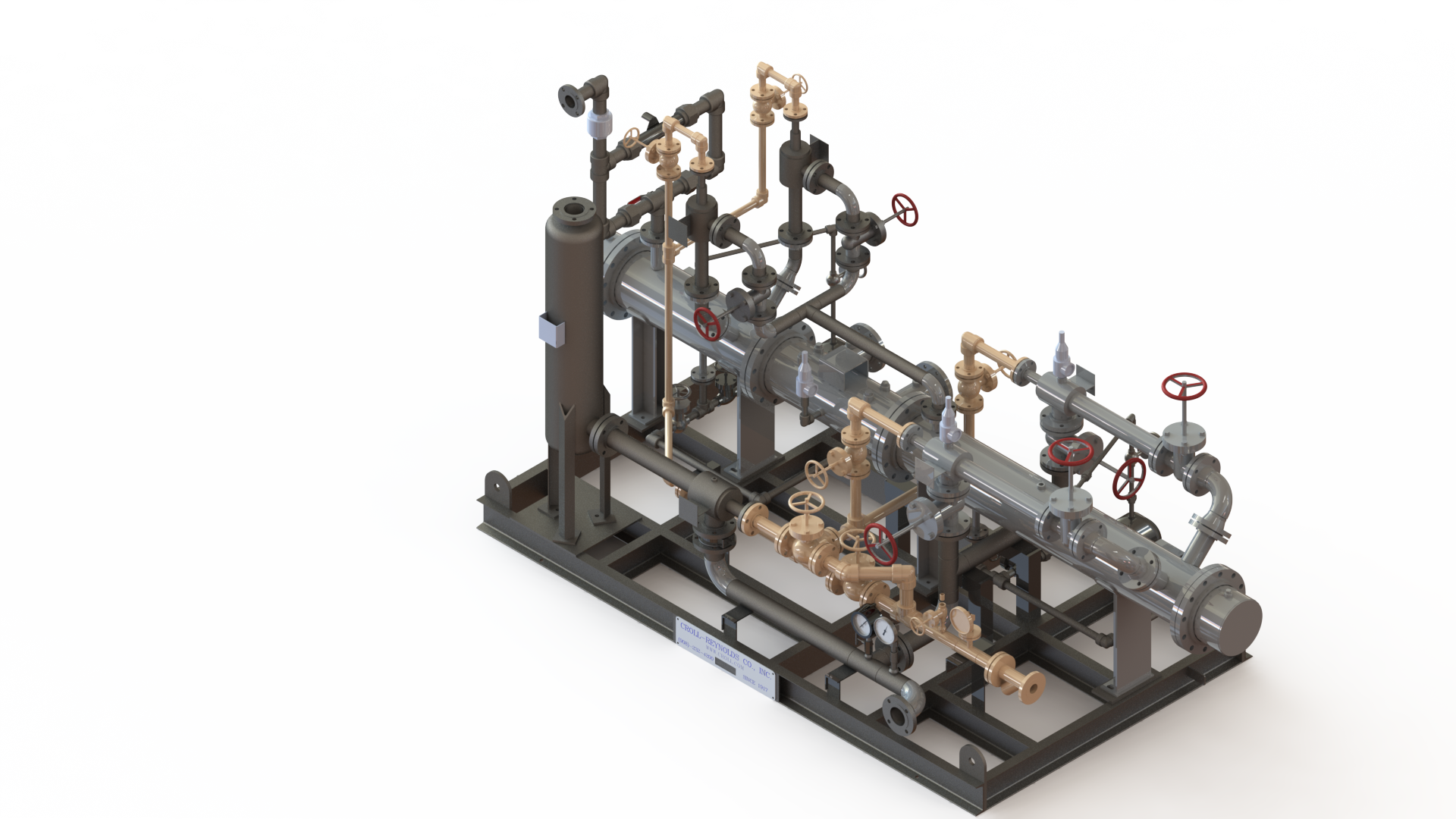
In process industries where reliable vacuum service is critical, the steam jet ejector remains one of the most dependable technologies available. Companies such as Croll Reynolds specialize in engineering these systems to handle demanding industrial applications involving high-volume gas streams and varying vacuum levels. The effectiveness of a steam jet ejector lies in the precise interaction of its core components: the steam chest, steam nozzle, suction head, and diffuser. Each element plays a vital role in converting pressure energy into velocity and then back into pressure to achieve efficient vacuum generation and compression. Understanding these components provides insight into how the system operates and why it continues to be widely used in industrial processes.
The Steam Chest: Creating the Suction Environment
The steam chest, sometimes referred to as the suction chamber, is the heart of the ejector’s vacuum-generating process. This is the area where motive steam is introduced and where the low-pressure region is formed. As high-pressure steam enters the steam chest through the nozzle, it rapidly accelerates, creating a localized vacuum. This drop in pressure enables the system to draw in process vapors or air from the connected equipment.
The steam chest is carefully engineered to ensure uniform steam distribution and optimal pressure conditions. Its internal geometry is designed to minimize turbulence while maximizing the efficiency of entrainment. Because this chamber experiences significant pressure variations, it must be constructed from durable materials capable of withstanding both thermal and mechanical stresses. The steam chest sets the stage for the entire energy conversion process that follows.
The Steam Nozzle: Converting Pressure into Velocity
The steam nozzle is responsible for transforming the potential energy of high-pressure steam into kinetic energy. Using converging-diverging nozzle technology, the steam accelerates as it moves through a narrowing passage before expanding into a diverging section. This acceleration can produce sonic or even supersonic velocities, resulting in a dramatic reduction in pressure within the steam chest.
This principle follows the jet vacuum effect, where an increase in fluid velocity leads to a decrease in pressure. The nozzle’s dimensions and contours are precisely calculated to achieve the required flow rate and vacuum level. Even minor deviations in geometry can affect performance, making precision engineering essential. The nozzle acts as the driving force of the ejector system, initiating the entrainment of suction fluids and establishing the vacuum conditions necessary for industrial processes.
The Suction Head: Entraining Process Vapors
The suction head serves as the entry point for process vapors, gases, or air into the ejector system. Once the low-pressure region is created in the steam chest, the suction head allows the external fluid to be drawn into the mixing zone. This process is known as entrainment, where the high-velocity motive steam captures and carries the suction fluid along with it.
The design of the suction head ensures smooth and efficient intake of gases without causing flow restrictions. In high-volume applications, the ability to handle large gas streams consistently is critical. The suction head must accommodate varying process conditions while maintaining stable operation. Proper alignment and integration with upstream equipment help ensure that the vacuum system operates reliably under fluctuating loads.
Mixing of Motive and Suction Fluids
After entering through the suction head, the process vapor mixes with the high-velocity steam within the ejector body. This mixing phase is crucial because it determines how effectively the system transfers momentum from the motive fluid to the suction fluid. The energy exchange that occurs here allows the combined stream to move forward at sufficient velocity to continue through the diffuser.
The Diffuser: Recovering Pressure for Discharge
The diffuser plays a critical role in converting velocity energy back into pressure energy. As the mixed stream exits the high-velocity zone, it enters the diffuser, where the passage gradually expands. This expansion slows the flow and allows pressure to increase. During this transition, the stream may experience a shockwave as it shifts from supersonic to subsonic speed.
By reducing momentum in a controlled manner, the diffuser creates the pressure recovery needed to move the fluid to the next stage of the vacuum system. The design of the diffuser must balance flow stability with efficient pressure conversion. Its geometry moderates the outflow conditions to ensure proper discharge into condensers or subsequent ejector stages.
Integration with Condensers and Multi-Stage Systems
Although the ejector itself consists of four primary components, its operation is often supported by condensers in multi-stage systems. After leaving the diffuser, the mixed stream may be cooled and condensed, reducing its volume and preparing it for further compression. This staged arrangement allows the vacuum system to achieve deeper vacuum levels while maintaining efficiency.
The precise coordination between the ejector components and the condenser enhances overall performance. By removing condensable vapors between stages, the system reduces load on downstream components and improves energy utilization.
Engineering Precision and Material Selection
The performance of each component depends not only on geometry but also on material selection and fabrication quality. Industrial environments often involve high temperatures, corrosive vapors, and fluctuating pressures. As a result, the steam chest, nozzle, suction head, and diffuser must be constructed from materials capable of withstanding these demanding conditions.
Conclusion
The reliability of a steam jet ejector is rooted in the precise interaction of its steam chest, nozzle, suction head, and diffuser. Each component plays a specific role in converting pressure into velocity, entraining process vapors, and recovering pressure for discharge. Companies like Croll Reynolds understand that careful engineering of these elements is essential for delivering consistent and economical vacuum solutions across a wide range of industrial applications. By optimizing component geometry and ensuring durable construction, the steam jet ejector continues to provide dependable performance in high-volume and high-demand environments.