
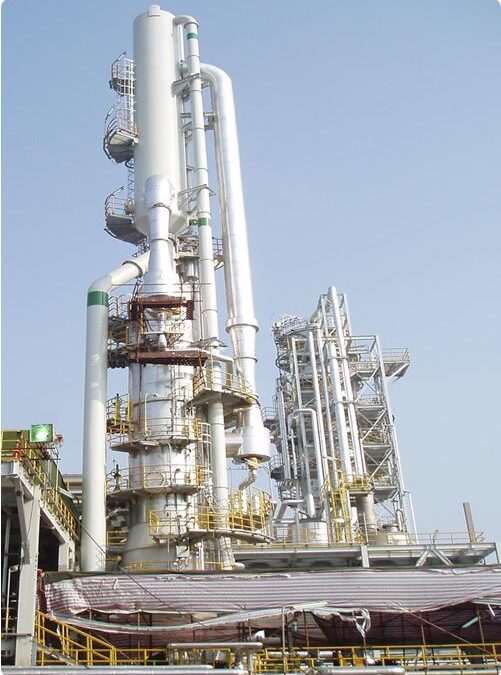
Industrial cooling plays a critical role in maintaining consistent production conditions across process industries. While conventional refrigeration systems rely on mechanical compressors and chemical refrigerants to lower water temperatures, another proven approach uses vacuum technology to achieve the same objective through pressure reduction. Vacuum Chillers offer an innovative method for cooling process water without compressors, lubricants, or refrigerants, making them a practical solution for many industrial applications. Croll Reynolds designs vacuum chiller systems that use multi-stage steam ejector technology to provide reliable, chemical-free cooling for industries requiring dependable temperature control and efficient operation.
Understanding the Principle of Vacuum Cooling
Vacuum cooling is based on a simple thermodynamic principle: reducing pressure lowers the boiling point of water. Under atmospheric pressure, water boils at 100°C, but as pressure decreases, water begins to evaporate at much lower temperatures.
When a vacuum is created inside a controlled chamber, a small portion of the water instantly evaporates. This rapid evaporation absorbs heat from the remaining water, causing its temperature to decrease. The process continues through successive stages until the desired cooling temperature is achieved.
Unlike conventional refrigeration methods, this cooling mechanism relies on pressure manipulation rather than mechanical compression, allowing industrial facilities to produce chilled water efficiently without traditional refrigeration equipment.
Why Mechanical Compressors Are Not Required
Traditional refrigeration systems depend on compressors to circulate refrigerants through repeated compression and expansion cycles. Compressors are often among the most energy-intensive and maintenance-heavy components of these systems.
Vacuum-based cooling eliminates this requirement by creating low-pressure conditions instead of compressing refrigerants. Since cooling occurs through flash evaporation inside vacuum chambers, there is no need for compressor-driven refrigeration cycles.
This design also removes many components commonly associated with conventional chillers, including refrigerant circuits, compressor lubrication systems, and related mechanical assemblies.
The Role of Multi-Stage Steam Ejectors
The vacuum inside the cooling system is generated using multiple steam ejectors arranged in stages.
Each ejector uses steam as the driving force to remove air and non-condensable gases from the system, progressively lowering the pressure inside individual cooling chambers.
The staged arrangement offers several operational advantages:
- Creates and maintains a stable vacuum.
- Supports continuous cooling performance.
- Improves overall process efficiency.
- Enables gradual temperature reduction across multiple chambers.
- Ensures consistent operating conditions during continuous production.
Because steam ejectors contain no rotating equipment, they provide dependable vacuum generation with minimal mechanical complexity.
How Water Moves Through the Cooling Process
Rather than cooling water in a single step, vacuum cooling occurs progressively through multiple chambers.
The process generally follows these stages:
- Steam ejectors establish a vacuum within the first chamber.
- Process water enters the chamber and experiences a sudden pressure reduction.
- A portion of the water flashes into vapor.
- Heat is removed from the remaining water during evaporation.
- Internal flow sections guide the cooled water into subsequent chambers.
- The process repeats until the target outlet temperature is reached.
- A downstream air removal stage maintains stable vacuum conditions throughout operation.
This gradual cooling approach improves process stability while allowing consistent production of chilled water suitable for industrial applications.
Chemical-Free Cooling Technology
One of the defining characteristics of this cooling method is the absence of chemical refrigerants.
Instead of relying on refrigerant gases or absorption solutions, cooling occurs entirely through controlled vacuum conditions and water evaporation.
This provides several practical advantages:
- No refrigerant handling requirements.
- No refrigerant leakage concerns.
- Elimination of absorption chemicals.
- Reduced environmental impact.
- Simplified system operation.
For facilities seeking sustainable cooling technologies, vacuum-based systems provide an environmentally responsible alternative without sacrificing reliability.
Equipment Designed for Long-Term Reliability
Industrial cooling equipment often operates continuously under demanding production schedules. Reliability therefore becomes a major consideration during equipment selection.
Vacuum cooling systems are designed with simplicity in mind. Their operating principle avoids many moving mechanical components that typically require regular servicing.
Important reliability features include:
- Minimal rotating equipment.
- Simple operating principle.
- Durable construction materials.
- Stable operating performance.
- Reduced mechanical wear.
With fewer mechanical assemblies exposed to continuous operation, maintenance activities can often be simplified compared with conventional refrigeration equipment.
Supporting High-Volume Industrial Water Cooling
Many manufacturing operations require large volumes of cooled water every day.
Vacuum cooling systems are particularly suited for applications where continuous water cooling is required across multiple process lines.
Typical industrial uses include:
- Product cooling during manufacturing.
- Flash cooling operations.
- Temperature-controlled processing.
- Product crystallization.
- Process water circulation.
- Evaporation support.
- Distillation processes.
- Drying operations.
The ability to maintain consistent cooling performance makes vacuum technology suitable for facilities where process stability directly affects product quality.
Flexible Construction for Diverse Industries
Industrial plants often have different process conditions, operating environments, and material compatibility requirements.
To accommodate these differences, vacuum cooling systems can be manufactured using a variety of construction materials suitable for demanding industrial services.
Material flexibility allows the equipment to be integrated into facilities handling different products and operating conditions while maintaining long service life.
This adaptability supports installation across numerous sectors, including chemical processing, pharmaceuticals, food manufacturing, flavors and fragrances, and pulp and paper production.
Lower Maintenance through Simpler Design
Maintenance costs represent a significant portion of the total lifecycle expense of industrial cooling equipment.
Systems with fewer moving components naturally reduce many routine maintenance activities associated with bearings, compressors, lubrication systems, and rotating machinery.
Operational benefits include:
- Simplified inspections.
- Reduced mechanical servicing.
- Fewer wear-related failures.
- Consistent long-term performance.
- Easier operation for plant personnel.
These characteristics contribute to improved equipment availability and reduced operational interruptions over extended production periods.
Conclusion
Modern industrial facilities continue to seek cooling technologies that combine operational reliability, simplified maintenance, and environmentally responsible performance. Vacuum Chillers achieve these objectives by producing chilled process water through controlled vacuum conditions instead of mechanical compression. Using multi-stage steam ejector technology, these systems eliminate the need for refrigerants, lubricants, and complex compressor assemblies while delivering dependable cooling across a wide range of industrial applications. With decades of expertise in vacuum process technology, Croll Reynolds provides engineered solutions that help manufacturers achieve efficient, chemical-free water cooling with durable systems designed for long-term industrial performance.