
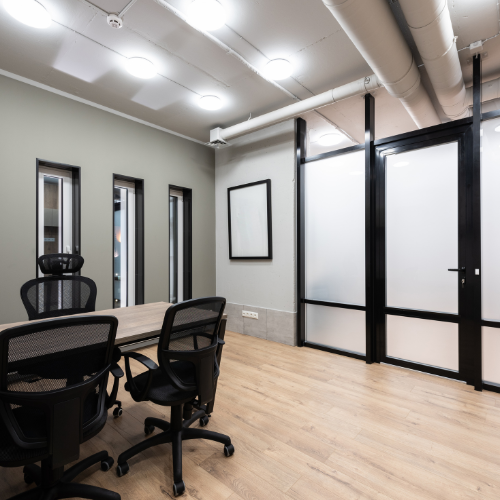
A lighting retrofit can do far more than replace old bulbs with newer fixtures. When planned correctly, it can improve visibility, reduce energy consumption, simplify maintenance, and create a more comfortable working environment. Businesses often begin by consulting commercial lighting contractors because a successful retrofit requires more than selecting efficient products. The existing electrical system, building layout, operating schedule, controls, and long-term maintenance requirements all need to be considered together.
Start With an Assessment of the Existing System
Before purchasing new fixtures, evaluate how the current lighting system performs.
An effective assessment should consider:
- Fixture age and condition
- Current wattage and energy consumption
- Areas with insufficient or excessive illumination
- Lamp and ballast replacement history
- Operating hours
- Existing lighting controls
- Electrical capacity
- Maintenance costs
- Safety and accessibility concerns
This information creates a baseline for comparing the expected results of the retrofit.
It is also important to identify why the existing system is being replaced. High energy costs may be the primary concern, while poor visibility, frequent failures, outdated controls, or inconsistent illumination may be equally important.
Match Lighting Design to the Space
Energy efficiency should not come at the expense of functionality.
Different commercial environments have different lighting requirements. Warehouses may need uniform illumination across high ceilings, while offices may require careful control of glare around computer screens. Retail spaces may need accent lighting alongside general illumination.
Consider More Than Fixture Efficiency
A highly efficient fixture can still produce a poor result if it is installed in the wrong location or provides inappropriate light distribution.
A proper design should consider:
- Ceiling height
- Room dimensions
- Surface reflectance
- Task requirements
- Natural daylight
- Occupancy patterns
- Glare control
- Emergency lighting requirements
The objective is to provide the right amount of usable light rather than simply maximizing fixture output.
Evaluate LED Technology Carefully
LED technology has become a common choice for commercial retrofits because it can provide substantial efficiency and long operating life. However, not every LED product is appropriate for every application.
Look at factors such as color temperature, color rendering, lumen output, beam distribution, dimming compatibility, operating temperature, and expected service life.
Product quality also matters. A low-cost fixture may appear attractive initially but can become expensive if it produces inconsistent performance or requires premature replacement.
Add Lighting Controls Where They Make Sense
Replacing fixtures without considering controls can leave significant efficiency opportunities unused.
Occupancy sensors can reduce unnecessary operation in intermittently used spaces. Daylight-responsive controls can adjust artificial lighting when sufficient natural light is available. Scheduling systems can also help prevent lighting from remaining active outside normal operating hours.
Use Controls Strategically
Not every room needs the same control strategy.
For example, storage areas may benefit from occupancy sensors, while open offices may require zoning and dimming. Exterior lighting can often benefit from astronomical scheduling or photocell controls.
The key is to design controls around how people actually use the building.
Check Electrical Compatibility
A retrofit should also account for the condition and capacity of the existing electrical infrastructure.
New lighting equipment may interact differently with circuits, controls, dimmers, emergency systems, or other electrical equipment. Older wiring and distribution components may also require attention before new technology is installed.
Working with qualified commercial lighting contractors can help businesses identify these issues before installation begins rather than discovering them after the project is underway.
Calculate the Financial Return
Energy savings are important, but the financial evaluation should go beyond electricity consumption.
A useful retrofit analysis can include:
- Fixture and equipment costs
- Installation labor
- Expected energy savings
- Reduced maintenance expenses
- Expected equipment lifespan
- Control-system costs
- Potential incentives
- Estimated payback period
A project with a slightly higher upfront cost may deliver better long-term value if it significantly reduces maintenance or energy consumption.
Compare More Than the Purchase Price
The cheapest fixture is not necessarily the least expensive option over its useful life.
Businesses should consider total cost of ownership. A durable fixture with lower energy consumption and fewer replacement requirements can produce greater savings over several years.
Plan Installation Around Business Operations
Commercial lighting projects can affect employees, customers, production schedules, and building access.
For that reason, installation should be scheduled carefully.
Depending on the property, work may be divided into phases so that essential areas remain operational. Businesses should also establish expectations for temporary lighting, access restrictions, noise, and cleanup.
A well-organized installation minimizes disruption while keeping the project moving efficiently.
Measure Results After Installation
The retrofit should not be considered complete simply because the new fixtures are operating.
After installation, compare performance against the original baseline. Check illumination levels, energy consumption, control functionality, occupant feedback, and areas where adjustments may be necessary.
Commissioning can also identify problems such as incorrectly programmed sensors, poorly positioned fixtures, or control zones that do not match actual usage.
Build Maintenance Into the Plan
Energy efficiency is not a one-time achievement. Lighting systems require ongoing inspection and maintenance to preserve performance.
Businesses should establish a maintenance schedule covering fixture condition, controls, sensors, connections, and areas where lighting performance has changed.
Keeping records of failures and repairs can also reveal recurring problems that deserve attention.
Conclusion
An energy-efficient lighting retrofit works best when it is treated as a complete system rather than a simple fixture replacement. Businesses should assess existing conditions, design lighting around actual tasks, evaluate controls, verify electrical compatibility, calculate long-term costs, and plan installation carefully.
The most successful projects balance energy efficiency with safety, visual comfort, operational needs, and long-term reliability. By taking a structured approach from assessment through post-installation measurement, businesses can create a lighting system that performs efficiently today while remaining practical to maintain in the years ahead.